


B7-33 Research Peptide
For laboratory research use only. Not for human or animal consumption, diagnostic, or therapeutic use.
What Is B7-33?
B7-33 represents a single chain synthetic peptide that is based on the B-chain of the human H2 relaxin protein. It was designed in order to retain the anti-fibrotic effects of relaxin but modify its activation of the target receptor. The natural relaxin consists of two chains linked by disulfide bonds, whereas B7-33 has a simplified single chain structure.
The discovery of this peptide is dated back to 2016. In that initial work, B733 bias profile was established by Hossain et al., and the peptide has since served as a common standard for receptor signaling studies.
The Mechanism: Why Biased Agonism Matters
To understand why B7-33 is useful in a lab setting, it helps to understand the receptor it targets. RXFP1 is a G-protein-coupled receptor that relaxin normally activates, and when a typical agonist binds it, several downstream pathways can switch on at once — including the cAMP pathway and the ERK1/2 pathway. MedsBase
These two pathways drive different biological responses. The ERK1/2 branch is associated with the anti-fibrotic, anti-scarring response, while the cAMP branch is more closely linked to relaxin’s vascular, hemodynamic, and proliferative effects — effects researchers often want to isolate away from when studying fibrosis specifically. MedsBase
This is where B7-33’s design becomes relevant. Full H2 relaxin stimulates both the cAMP/PKA pathway and ERK1/2, but B7-33 produces preferential activation of pERK1/2 with minimal cAMP stimulation in cells that endogenously express RXFP1 — a pharmacological pattern called biased or functionally selective agonism. RCDbio
The original peptide characterization study adds important nuance here: in HEK cells stably expressing RXFP1, B7-33 only poorly induced pERK1/2 phosphorylation, but in myofibroblast cultures it potently activated pERK1/2 with high efficacy, and these MMP- and pERK-related effects were shown to be RXFP1-specific because they were blocked by an RXFP1-specific antagonist. This cell-type dependence is itself a notable research finding — it suggests B7-33’s signaling behavior isn’t fixed, but depends on the cellular context, which is part of why it remains a subject of active study rather than a settled mechanism. PubMed CentralPubMed Central
At the receptor-complex level, the pathway selectivity has been linked to B733’s activation of RXFP1-angiotensin II type 2 receptor (AT2R) heterodimers — receptor complexes that signal through pERK1/2 rather than cAMP. Supporting this, the MMP-2-promoting effects of both H2 relaxin and B7-33 were equivalently blocked by either an RXFP1 or an AT2R antagonist, pointing to a shared signaling node between the two receptors. RCDbioPubMed Central
Organ-System Research Applications
Cardiac fibrosis. This is the most studied application. A peer-reviewed pharmacology study found that the single-chain relaxin mimetic B7-33 maintains the cardioprotective effects of relaxin and more rapidly reduces left ventricular fibrosis compared to perindopril in an experimental cardiomyopathy model. More broadly, in rodent models of cardiac fibrosis, cardiomyopathy, and myocardial ischaemia-reperfusion, B7-33 is used to characterize pERK-mediated cardioprotective and anti-fibrotic pathway modulation, collagen deposition reduction, and inhibition of myofibroblast activation. Peptide-worksRCDbio
Hepatic fibrosis. In liver-focused research, B733 appears to influence hepatic stellate cells, which play a central role in liver fibrosis, with the peptide’s RXFP1 interaction potentially reducing fibrotic tissue deposition. The Emory Wheel
Renal fibrosis. Chronic kidney disease research has also examined whether B733’s interaction with RXFP1 can influence renal fibrosis, suggesting possible avenues for further study. The Emory Wheel
Vascular function. B7-33’s interaction with RXFP1 is hypothesized to relax vascular smooth muscle cells, a mechanism that could decrease vascular resistance and improve blood flow in experimental models. The Emory Wheel
Collagen turnover at the molecular level. Through RXFP1 activation, B7-33 has been shown to suppress TGF-β1–induced myofibroblast differentiation and collagen type I/III synthesis, key drivers of fibrosis, working through what researchers describe as a pERK–NO–MMP signaling axis that mediates antifibrotic and vasoprotective effects in cell models. Arizona-mallArizona-mall
Institutional Research Context
This isn’t a niche or speculative research area. Organizations including The Florey Institute are actively developing H2 relaxin analogs like B7-33 as candidate anti-fibrotic therapies, citing that fibrosis-related organ dysfunction contributes to more than 45% of deaths globally, and currently available therapies such as ACE inhibitors and ARBs only delay disease progression by months while carrying side-effect risks with chronic use. The FloreyThe Florey
B7-33 vs. Native H2 Relaxin: Research Comparison
| Property | H2 Relaxin (native) | B7-33 |
|---|---|---|
| Structure | Two-chain peptide, disulfide-linked | Single-chain peptide |
| RXFP1 signaling | Activates both cAMP and ERK1/2 pathways | Preferentially activates ERK1/2, minimal cAMP |
| Receptor profile | Broad RXFP1 activation | Biased/functionally selective agonism |
| Synthesis complexity | Higher (two-chain assembly) | Lower (single-chain) |
| Primary research interest | Original anti-fibrotic, vasodilatory hormone | Pathway-selective tool for isolating anti-fibrotic signaling from cAMP-linked effects |
| Clinical status | Studied in human trials as serelaxin | No human clinical trials; preclinical only |
Research Limitations to Note
- All findings described above come from preclinical work in isolated cells and rodent models; none have been confirmed in humans. MedsBase
- There are no human clinical trials and no approved human dosing for B7 33. MedsBase
- B7-33’s potency in pERK assays was found to be modest and significantly lower than H2 relaxin’s in HEK-RXFP1 cells, even though it showed high efficacy in myofibroblast cultures — a reminder that results vary substantially by experimental model. PubMed Central
- B7-33 is a research-grade laboratory compound, not a licensed medicine or supplement. MedsBase
Product Specifications
| Attribute | Detail |
|---|---|
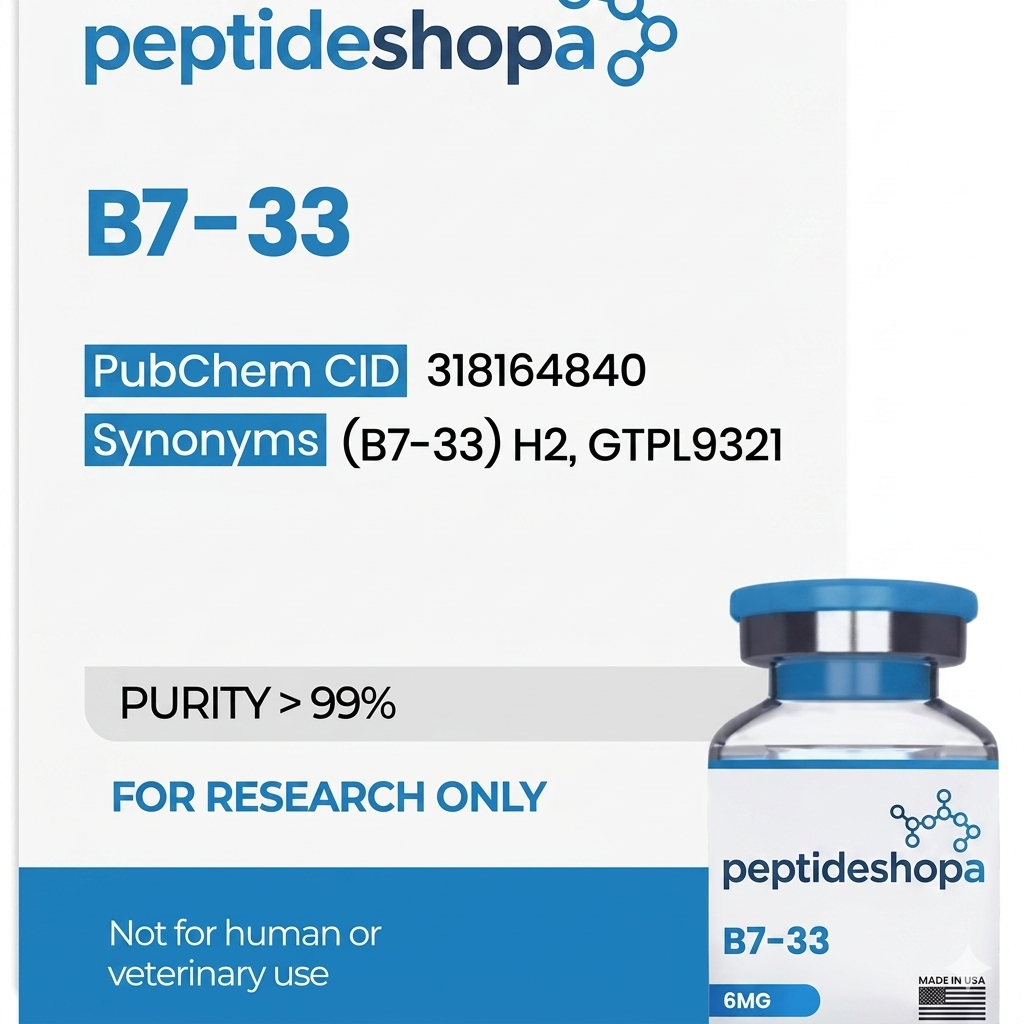
| Peptide name | B7-33 |
| Source | Single-chain analog of H2 relaxin B-chain |
| Receptor target | RXFP1 (biased agonist) |
| Form | Lyophilized powder |
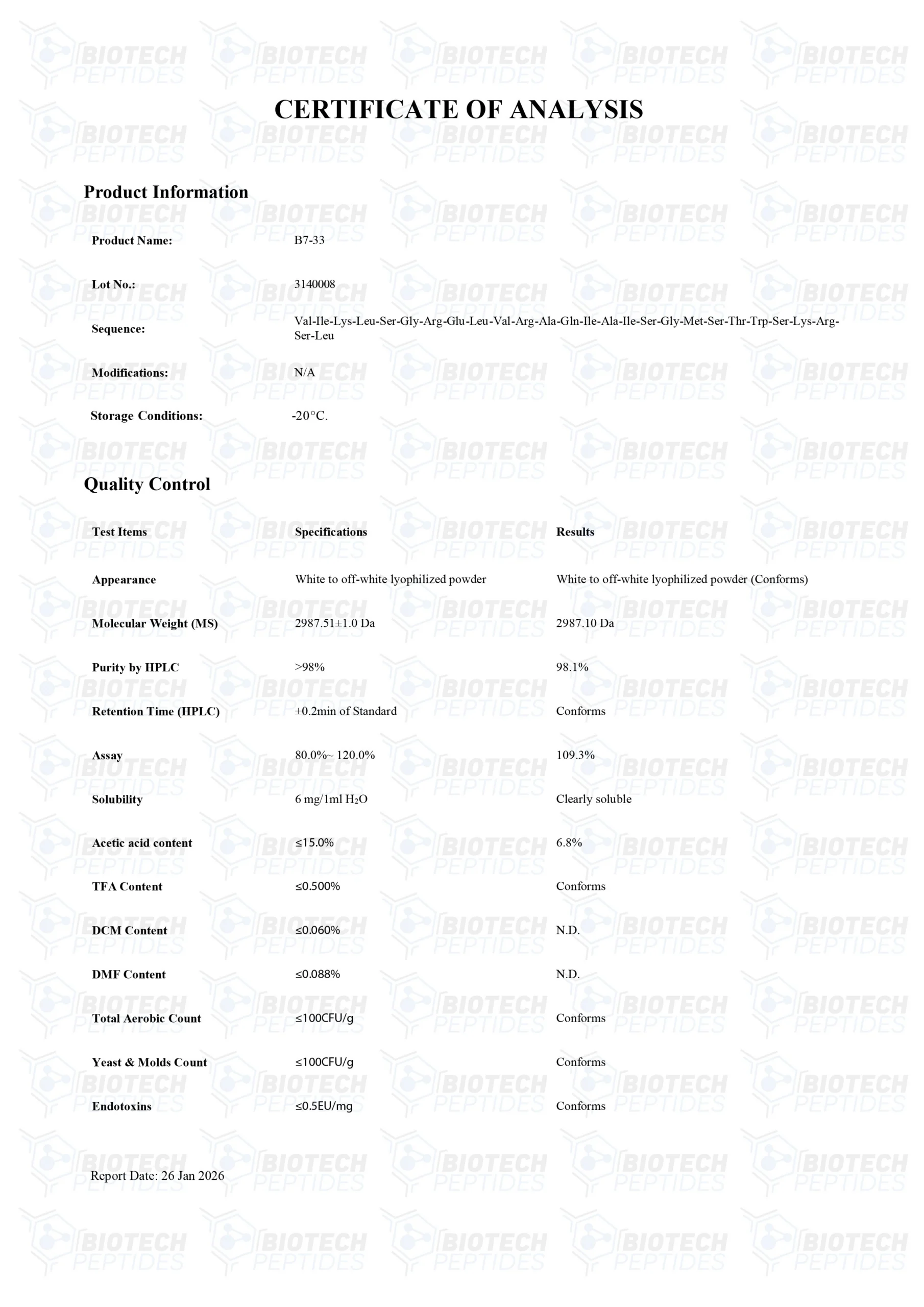
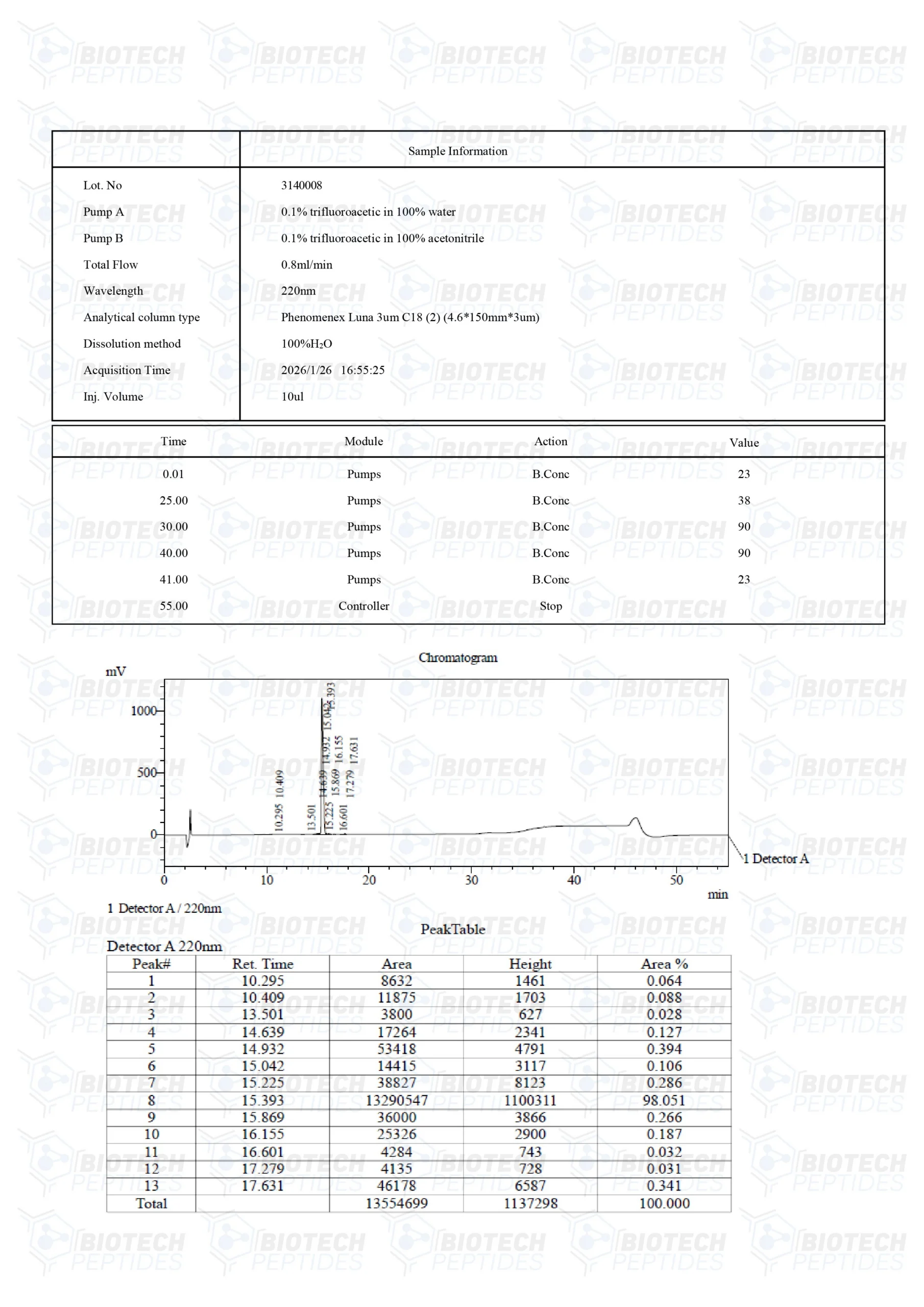
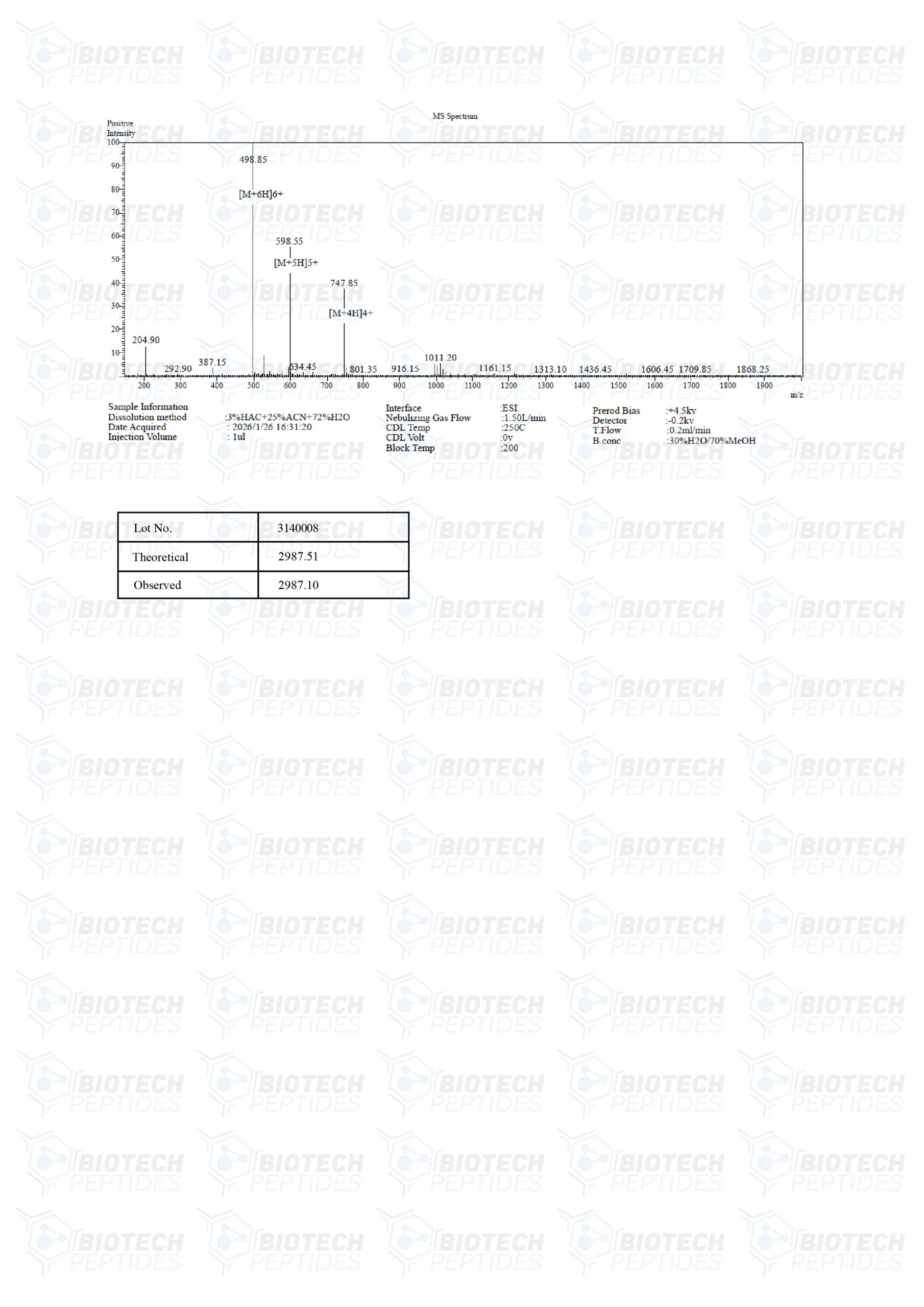
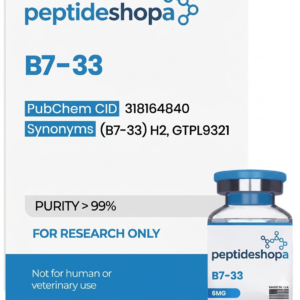
| Purity | ≥98% (HPLC verified — see COA) |
| Storage (lyophilized) | -20°C, desiccated, protected from light |
| Storage (reconstituted) | 2–8°C; for in-vitro assay use within recommended timeframe |
| Intended use | In-vitro laboratory research only |
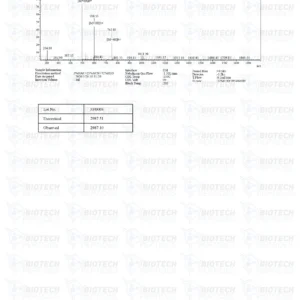
| COA | Included with every batch |
(Confirm exact purity, batch CAS reference, and storage stability windows against your own verified Certificate of Analysis before publishing — don’t carry over numbers from other suppliers’ listings.)
Why Source B7-33 From Peptideshopa
- Third-party verified Certificate of Analysis with every order
- Synthesized and tested specifically for laboratory research applications
- Clear, compliant labeling with no ambiguity about intended use
- [Add: cold-chain shipping details, batch traceability, institutional/bulk ordering, customer support for research accounts]
Frequently Asked Questions
What is B7-33 used for in research?
It’s studied as an anti-fibrotic research peptide, primarily in preclinical models of heart, lung, and kidney fibrosis. MedsBase
Is B7-33 the same as relaxin?
No. It’s a rationally designed single-chain peptide that mimics the biological actions of human relaxin-2, but with a simplified structure compared to the native two-chain hormone. Arizona-mall
What makes B7-33 different from other RXFP1 agonists?
Its biased agonism — selectively activating the pERK1/2 pathway while avoiding the cAMP/PKA cascade — makes it the primary reference compound researchers use to study functionally selective signaling at RXFP1. RCDbio
Does B7-33 work the same way in all cell types?
No — research shows it poorly activates pERK1/2 in HEK-RXFP1 cells but potently activates the same pathway with high efficacy in myofibroblast cultures, indicating cell-type-dependent signaling behavior that remains an active research question. PubMed Central
Has B7-33 been tested in humans?
No. Evidence is preclinical only, with no human clinical trials and no approved human dosing. MedsBase
Is B7-33 approved for any medical use?
No. It is sold exclusively as a research chemical for laboratory and in-vitro use.
What organ systems is B7-33 studied in?
Primarily cardiac, hepatic, and renal fibrosis models, along with vascular smooth muscle research.
Who is institutionally researching B7-33?
Research institutes including The Florey are developing relaxin-based analogs like B7-33 as candidate anti-fibrotic therapies, alongside academic labs publishing in peer-reviewed pharmacology journals.
| Brand | Biotech Peptides |
|---|
Related products