


Adipotide FTPP Peptide
Adipotide FTPP is a category of proapoptotic peptides intended to eliminate fat cells.They appear to cut off the blood supply specifically to the adipose tissues and not the vessels supplying blood to the rest of the organism. Reports of studies performed in monkeys have suggested their potential to induce weight loss, which may improve symptoms of insulin resistance and reduces the symptoms of type 2 diabetes.
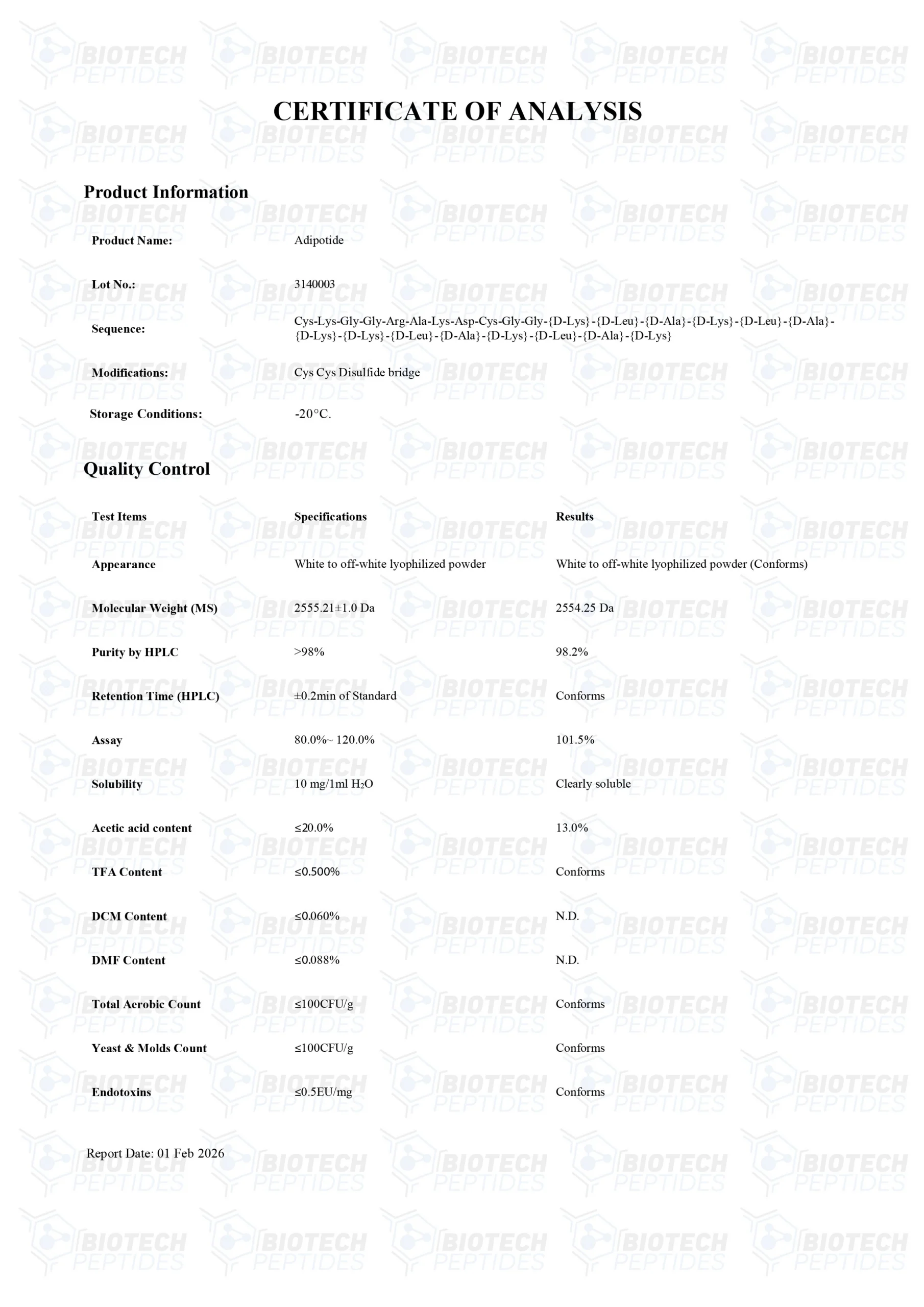
Specifications of FTPP peptide
Other Known Titles: Adipotide FTPP peptide
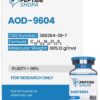
Molecular Formula: C152H252N44O42
Molecular Weight: 2611.41 g/mol
Sequence: Cys-Lys-Gly-Gly-Arg-Ala-Lys-Asp-Cys—Gly-Gly–(Lys-Leu-Ala-Lys-Leu-Ala-Lys)2
Adipotide FTPP peptide Research
Adipotide FTPP peptide Mechanism of Action
FTPP peptide has been suggested to exert action by binding to the receptors for two specific proteins, ANXA2 (Annexin A2) and prohibitin (PHB). It appears that these receptors may be expressed in a wide range of cells, but immunohistochemical analysis hypothesizes that they potentially form a unique ANXA2-prohibitin receptor system that are apparently found in white fat tissue.[2] FTPP peptide appears that these receptors were found on the endothelial cells of blood vessels that support white fat cells. Furthermore, research suggests that these receptors may play a role in regulating fatty acid transport in white adipose tissues (WAT).
Adipotide FTPP peptide Structure
At the same time, (KLAKLAK)2 may disrupt mitochondrial membranes upon receptor-mediated cell internalization and possibly cause programmed cell death. As Adipotide FTPP peptide may bind to prohibitin in white adipose vasculature, it potentially triggers apoptosis and hypothetically results in the ablation of white fat cells. According to research, Adipotide and other similar peptidomimetics may hold potential for reducing both subcutaneous and visceral fat and may even target intra-organ fat, such as in fatty liver.In fact, the researchers posit that “vascular-targeted nanotherapy has the potential to contribute to the control of adipose function and ectopic fat deposition associated with obesity and the metabolic syndrome.”
Adipotide FTPP peptides and Cancer Cells
Cancerous tissues can grow rapidly and become metastatic due to the large network of blood vessels. Suppose prohibitin, found in several cancer types, is targeted. In that case, it may be possible to mitigate cancer in a more focused manner and avoid the associated negative impacts brought about due to damage to surrounding tissues in certain chemotherapy scenarios. Some researchers posit that there may be a potential association between excess fat tissue cells and the occurrence of cancer cells. One study discussed several potential mechanisms that may help explain the potential association between obesity and the occurrence of aggressive prostate cancer cells (PCa), aka tumorigenesis.Three main mechanisms are highlighted: the insulin/insulin-like growth factor (IGF)-1 axis, sex hormones, and adipokine signaling. The insulin/IGF-1 axis appears implicated in the potential tumorigenesis associated with obesity, including PCa. It is suggested that high insulin levels resulting from a hyperinsulinemic state induced by diet may potentially accelerate tumor cell growth in PCa models.
Future Research FTPP peptide
Anti-angiogenic molecules like Adipotites target the blood vessels and are considered a potential agent in cancer studies.[9] Most of the research with Adipotides have been focused on their potential in fat loss and diabetes. They have been suggested to target the blood vessels of adipose tissues in which they supposedly induce apoptosis.
Disclaimer: The products mentioned are not intended for human or animal consumption. Research chemicals are intended solely for laboratory experimentation and/or in-vitro testing. Bodily introduction of any sort is strictly prohibited by law. All purchases are limited to licensed researchers and/or qualified professionals. All information shared in this article is for educational purposes only.
References
- Kolonin, M. G., Saha, P. K., Chan, L., Pasqualini, R., & Arap, W. (2004). Reversal of obesity by targeted ablation of adipose tissue. Nature medicine, 10(6), 625–632. https://doi.org/10.1038/nm1048
- Staquicini, F. I., Cardó-Vila, M., Kolonin, M. G., Trepel, M., Edwards, J. K., Nunes, D. N., Sergeeva, A., Efstathiou, E., Sun, J., Almeida, N. F., Tu, S. M., Botz, G. H., Wallace, M. J., O’Connell, D. J., Krajewski, S., Gershenwald, J. E., Molldrem, J. J., Flamm, A. L., Koivunen, E., Pentz, R. D., … Arap, W. (2011). Vascular ligand-receptor mapping by direct combinatorial selection in cancer patients. Proceedings of the National Academy of Sciences of the United States of America, 108(46), 18637–18642. https://doi.org/10.1073/pnas.1114503108
- Salameh, A., Daquinag, A. C., Staquicini, D. I., An, Z., Hajjar, K. A., Pasqualini, R., Arap, W., & Kolonin, M. G. (2016). Prohibitin/annexin 2 interaction regulates fatty acid transport in adipose tissue. JCI insight, 1(10), e86351. https://doi.org/10.1172/jci.insight.86351
- Kolonin, M. G., Saha, P. K., Chan, L., Pasqualini, R., & Arap, W. (2004). Reversal of obesity by targeted ablation of adipose tissue. Nature medicine, 10(6), 625–632. https://doi.org/10.1038/nm1048
- Hossen, N., Kajimoto, K., Akita, H., Hyodo, M., & Harashima, H. (2013). A comparative study between nanoparticle-targeted therapeutics and bioconjugates as obesity medication. Journal of controlled release : official journal of the Controlled Release Society, 171(2), 104–112. https://doi.org/10.1016/j.jconrel.2013.07.013
- Allott, E. H., Masko, E. M., & Freedland, S. J. (2013). Obesity and prostate cancer: weighing the evidence. European urology, 63(5), 800–809. https://doi.org/10.1016/j.eururo.2012.11.013
- Hossen, N., Kajimoto, K., Akita, H., Hyodo, M., & Harashima, H. (2013). A comparative study between nanoparticle-targeted therapeutics and bioconjugates as obesity medication. Journal of controlled release : official journal of the Controlled Release Society, 171(2), 104–112. https://doi.org/10.1016/j.jconrel.2013.07.013
- Barnhart, K. F., Christianson, D. R., Hanley, P. W., Driessen, W. H., Bernacky, B. J., Baze, W. B., Wen, S., Tian, M., Ma, J., Kolonin, M. G., Saha, P. K., Do, K. A., Hulvat, J. F., Gelovani, J. G., Chan, L., Arap, W., & Pasqualini, R. (2011). A peptidomimetic targeting white fat causes weight loss and improved insulin resistance in obese monkeys. Science translational medicine, 3(108), 108ra112. https://doi.org/10.1126/scitranslmed.3002621
- Thuaud, F., Ribeiro, N., Nebigil, C. G., & Désaubry, L. (2013). Prohibitin ligands in cell death and survival: mode of action and therapeutic potential. Chemistry & biology, 20(3), 316–331. https://doi.org/10.1016/j.chembiol.2013.02.006
| Brand | Biotech Peptides |
|---|
Related products


